
Could AI Lock In Global Power for Centuries? Portuguese Caravel Says it Might
First-mover tech builds moats. Grab the tools before the gap hardens.

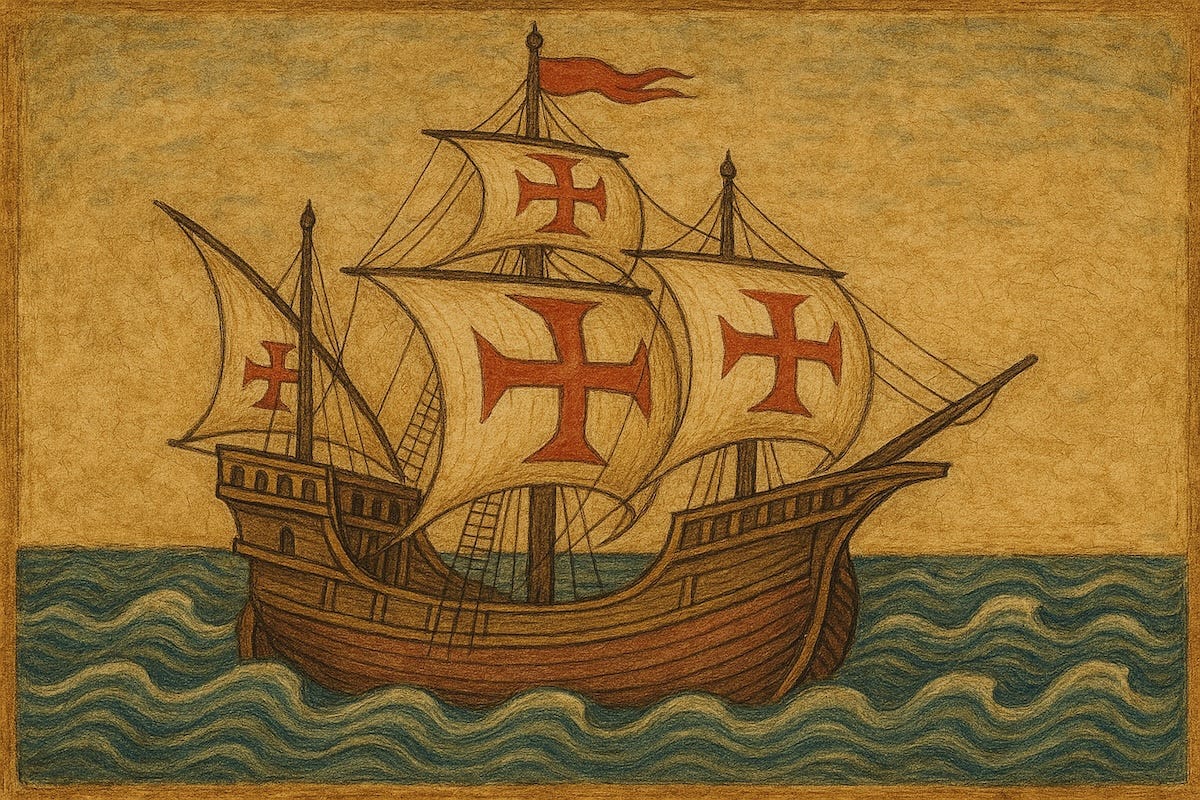
Early in the 15th century, Portuguese sailors tested a light new ship called the caravel. Its triangular sails let it move even when the wind was against it, so Portugal reached coasts other nations could not. That head start turned into forts, trade posts, and secret maps. For almost a century, Portugal kept rivals one step behind because it moved first.
Today, artificial intelligence looks open to everyone: free LLMs, open‑source code, endless tutorials. But the real edge goes to the person who dives in early and uses these tools every day. Each time you let an AI draft, outline, or check your work, you save minutes, sharpen your skills, and free time for bigger ideas. While others are still watching demos or doubting AI because it can’t do magic it never was supposed to be doing, you’re already adding new tricks to your personal toolkit, and that advantage grows quickly.
Why the AI Playing Field Won’t Stay Even for Long
First movers set the pace. Early adopters who practice with AI on real tasks finish faster, learn more, and land the next big assignments. Each prompt they refine and trick they discover becomes part of a private playbook that outsiders cannot borrow.
Momentum builds fast. A coworker who lets AI handle rough drafts finishes in hours, not days. They use the saved time on harder problems, gain fresh insight, and earn trust for bigger projects. Each loop of time saved and skill gained widens the gap.
Miss the first turns of that flywheel and you spend the rest of the race running uphill.
There is also the risk that those who climb first will pull the ladder up behind them. As AI takes over many entry‑level chores, junior roles shrink or vanish. With fewer apprentices, who becomes the next generation of experts? If you cannot find a traditional starter job, you may have to build your own apprenticeship by sharing projects online, taking small freelance gigs, or teaming up with peers. The point is to keep learning in public so your skills stay visible when new openings appear.
Staying in the Race
No one can stop the gap from opening, but each person can shrink it. These three habits help most:
Use AI on real work now. Treat it like a helper who drafts, summarizes, or checks your output. Small wins add up quickly.
Keep your own notebook of prompts and lessons you learn. Recording what works for you builds a private set of “maps” that others don’t have.
Invest in human strengths AI still lacks: curiosity, empathy, and clear storytelling. These traits make you valuable even when the routine parts of a job become free.
The Clock Is Ticking
The caravel reshaped the world over centuries. AI is compressing its revolution into years. Waiting even a short time could let the gap harden like concrete. Start experimenting now, learn every week, and keep control of your own tools so the future stays within reach.
Don’t get me wrong, I hate AI hype as much as Ron Swanson would. Still, the practical gains are real. I would rather start learning today than end up like Venice, once Europe’s trade titan, pushed aside after it sat out the Age of Discoveries.
Pick up the tools now, before the ship sails without you.